Agent Systems · R&D Demos
Markdown to Knowledge Graph Pipeline
Exploring documentation-to-graph transformation with Neo4j
Juan Iturbe •
Exploring documentation-to-graph transformation with Neo4j
Research & Demo
This project is an experimental knowledge graph ingestion pipeline built to explore how documentation can be transformed into a structured, queryable graph.
This demo explores a common limitation of traditional documentation:
Markdown is easy to write, but hard to reason over programmatically.
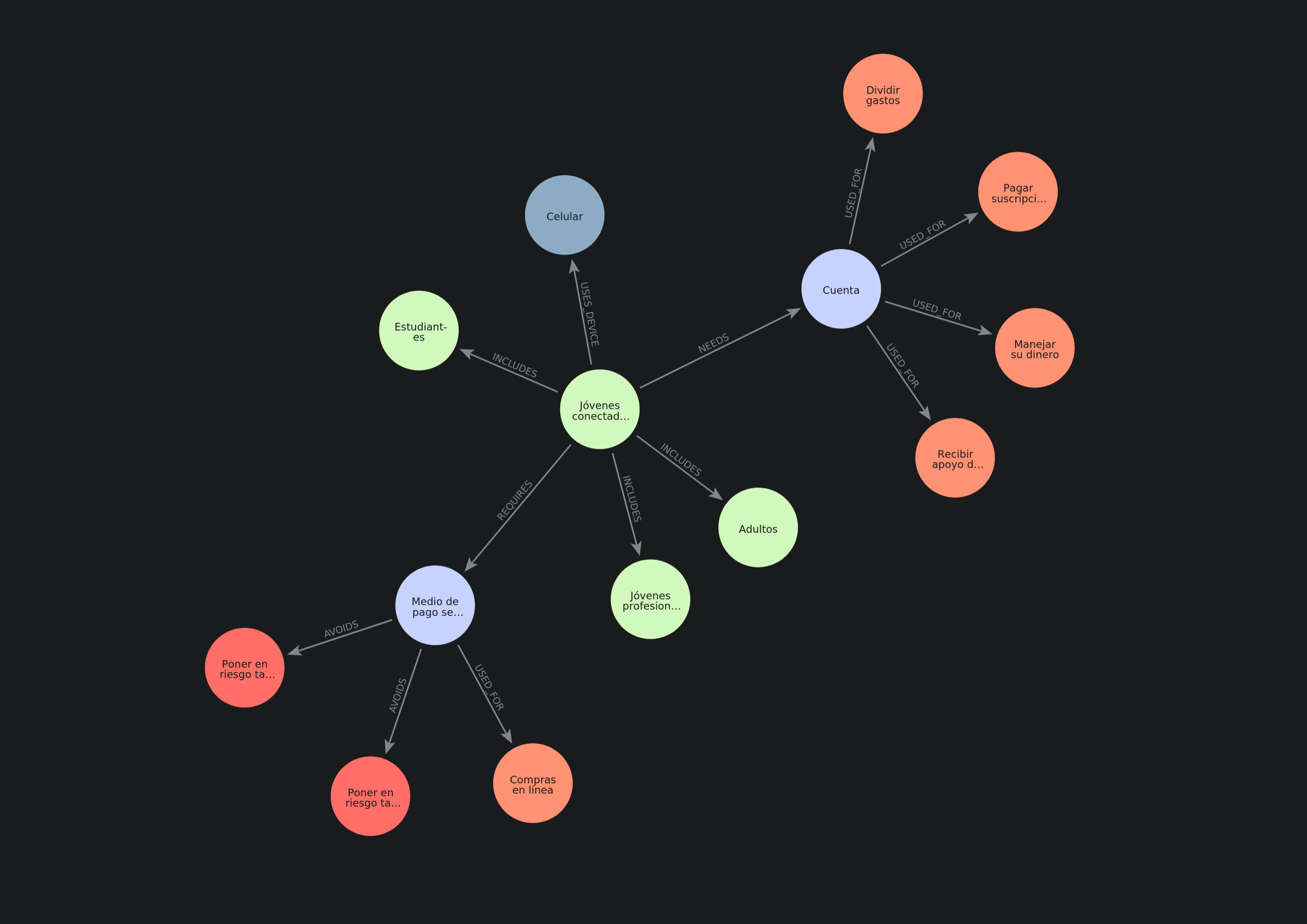
The pipeline converts hierarchically structured markdown into a Neo4j knowledge graph, making concepts, sections, and references explicit and navigable.
The emphasis is on ontology design and semantic structure, not full-text search or static documentation rendering.
Instead of treating documentation as flat text, the system treats it as structured knowledge:
This enables graph-native queries such as:
The pipeline processes a directory of markdown files and builds a deterministic ontology in Neo4j.
High-level stages:
The pipeline is intentionally simple to make the data model the primary focus.
Concept
Chunk
(:Concept)-[:HAS]->(:Chunk)(:Chunk)-[:PART_OF]->(:Concept)Bidirectional relationships make traversal and reasoning easier without relying on implicit hierarchy.
Shows how unstructured documentation can be mapped into a formal graph model with clear semantics.
The system is designed around relationships first, not documents or tables.
Given the same markdown structure, the pipeline produces the same graph structure every time.
The resulting graph can be extended with:
This pipeline acts as a base layer for more advanced knowledge systems.
No frameworks are hidden behind abstractions — the focus is on data modeling clarity.
Areas of interest: